Your selling plan
Fruit, vegetables and herbs
Keep produce clean, honestly graded and protected from harvest to handover. Natural variation is fine when the listing and photograph set a fair expectation.
Step 1 of 4
Prepare it
Sort out damaged or spoiled items. Use potable water where washing is part of your process, keep clean produce away from soil and chemicals, and record the harvest or packing batch.
How do I do this?
Create a written harvest and packing routine: reject damaged food, identify each harvest or packing batch and use potable water wherever water contacts ready-to-eat produce.
Why does it matter?
It prevents contaminated or poor-quality produce entering an order and lets you identify which harvest was supplied.
Where do I get help?
Ask your council food-safety team to review the routine and use the FSA food-hygiene guidance.
Read this guidance on FreshFarmStep 2 of 4
Describe and measure it
Sell by a clear count, bunch, punnet, box or verified weight. State the variety, grade where relevant, pack size, origin and whether the photograph is representative.
How do I do this?
Choose a repeatable sales unit—count, bunch, punnet, box or verified weight—and photograph a normal example beside the actual pack. Record whether weights are fixed or approximate.
Why does it matter?
The customer must be able to understand and compare the quantity before paying. Weighed goods also need suitable equipment and accurate declarations.
Where do I get help?
Ask Trading Standards about weights, measures, origin or crop-specific marketing standards.
Read this guidance on FreshFarmStep 3 of 4
Store it
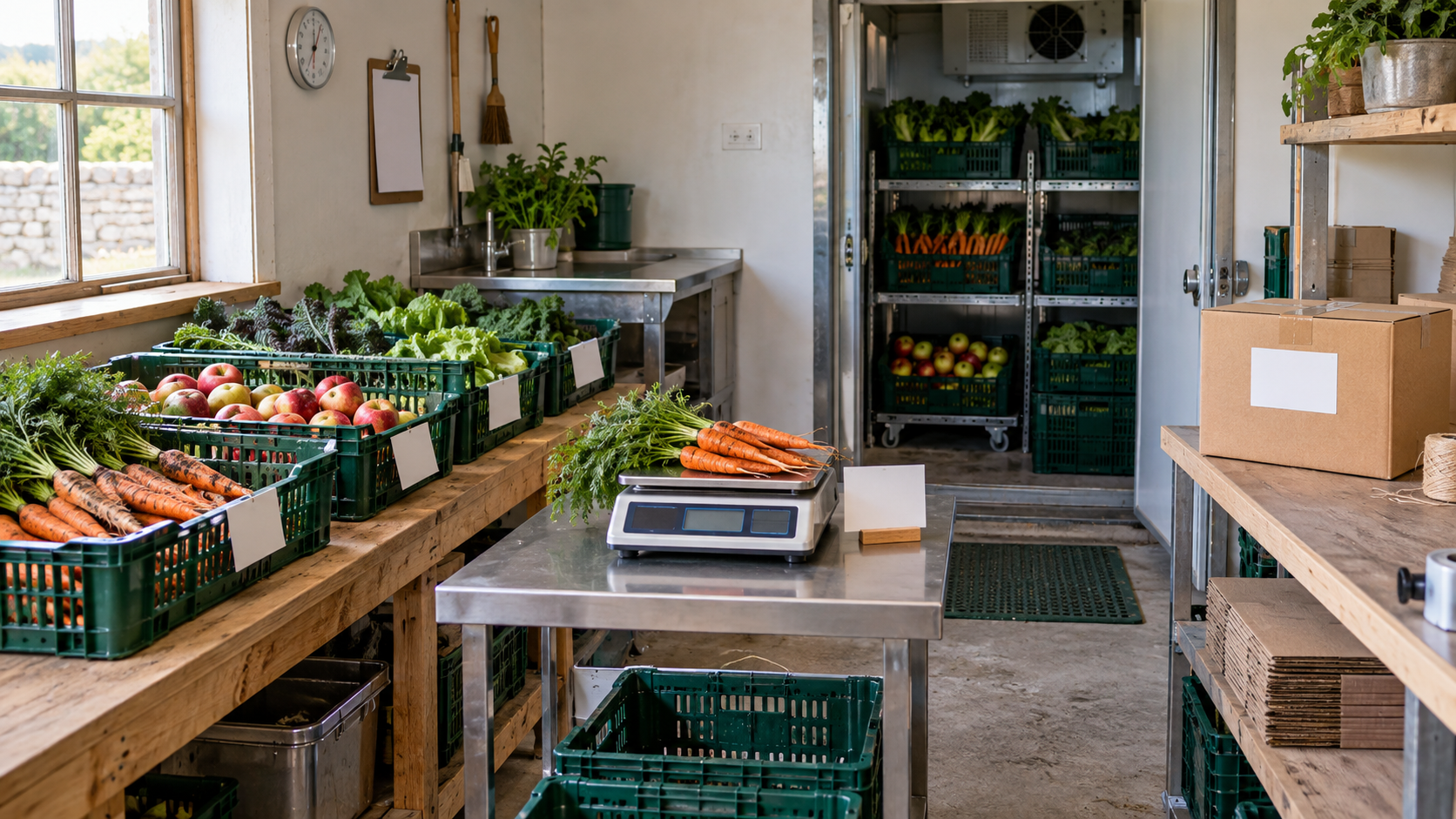
Use clean, pest-controlled storage suited to the crop. Separate food from fuels, pesticides, animals and dirty equipment. State any refrigeration and shelf-life advice.
How do I do this?
Map a clean route from field container to finished-product store. Use washable crates, keep food above the floor and away from animals, fuel and crop chemicals, and record any temperature checks.
Why does it matter?
Storage can contaminate, crush, wilt or shorten the usable life of otherwise sound produce.
Where do I get help?
Use the FSA food-hygiene guidance and confirm crop-specific controls with your council.
Read this guidance on FreshFarmStep 4 of 4
Pack and label it
Choose clean, food-suitable packaging that prevents crushing, moisture damage and contamination. Vent produce that needs airflow and make the farm and batch traceable.
Make it ready for handover
Set a realistic picking and packing deadline. Keep packed orders shaded or chilled where needed and give collection customers a named place and time.
How do I do this?
Test the filled pack for ventilation, crushing and moisture. Add the farm, product, quantity, batch and storage information required for that item, then place it in a named collection area.
Why does it matter?
The food and its information must arrive in the same safe, recognisable condition shown online.
Where do I get help?
Use GOV.UK packaging and labelling guidance and ask Trading Standards to review an example label.
Read this guidance on FreshFarmWhat you need before you sell
Follow these steps for fruit, vegetables and herbs.
Open each step for a plain-English explanation, where to start and what to have ready. FreshFarm has joined the guidance to this product type so you do not have to work it out from a list of links.
1Food-business registrationRequired starting pointOpen
What this means
Register the place where you store, prepare or sell food with your local authority. Do this at least 28 days before food trading starts.
Where to get it
Use the FSA registration service; it sends the details to the correct council.
Have this ready
Registration confirmation and the address of every food premises you use.
2Written food-safety proceduresRequired starting pointOpen
What this means
Write down how you control contamination, cleaning, pests, traceability and unsafe-food withdrawal. The plan should reflect what actually happens on your farm.
Where to get it
Start with the FSA food-safety management guidance, then ask your council’s food-safety team whether a specific pack suits your operation.
Have this ready
Your completed procedures, cleaning checks, supplier and batch records, and recall contacts.
3Organic or protected claimsOnly if you make the claimOpen
What this means
Words such as “organic” need recognised certification. Crop names, origin and quality claims must be accurate and supported.
Where to get it
Apply through an approved UK organic control body before describing food as organic. Ask Trading Standards about protected or crop-specific descriptions.
Have this ready
A current certificate and the evidence supporting every claim used in the listing.